Showing posts with label West End. Show all posts

Thursday, 1 August 2019

The Passing Of A True Genius Of The Theatre


Yesterday, July 31st, one of my absolute theatrical heroes exited the world stage. Given his age (91) it was bound to happen sooner rather than later but Hal Prince was one of those figures who you convince yourself will live forever. In some ways he will: the mark he left on the world of theatre is truly immeasurable and the numerous shows he ushered into the word, be it as producer or director - or sometimes even both, include a substantial number which have become legendary in the entertainment industry. 
To say that the news of Prince's passing came as a blow to me is an understatement and, though I sadly never met the man, his influence on me is quite far-reaching. Prince's methods and philosophy have influence my own approach to all aspects of theatre (and entertainment) and I have always devoured all material I can find on the man. 
Yesterday felt like a real marking of the end of something and I will continue to mourn Harold Prince deeply. I can find some semblance of comfort in the fact that his influence still thrives throughout theatre and his productions will continue to be referred to with reverence and awe. Of course, he was not perfect - no one is - but even in his failures Prince always looked to learn something and that is something I attempt to emulate.

Harold (Hal) Prince 1928 - 2019

Saturday, 16 June 2018

"Jim Steinman's Bat Out Of Hell - The Musical", Dominion Theatre, 30/5/16

Bat Out Of Hell is resurrected at London's Dominion Theatre and rocks bigger than before! A futuristic, rock retelling of the Peter Pan fable, we enter the world of "Obsidian", an island city separated from the mainland following chemical wars, whose inhabitants form two factions - dictator Falco, his family and followers/employees and The Lost, a group of perpetual 18 year-olds - victims of the chemical warfare - led by Strat, who rebel against Falco's real estate ambitions. As Falco's daughter, Raven, turns 18 she encounters Strat and the two fall in love. Confrontations ensue as various members of the factions struggle to live and love dealing with issues of love, loss and revenge along the way.


The production is leaner than ever, although "It Just Won't Quit" is still missed and some of the edits are unnecessary - particularly Zahara's prompting Strat to return to Raven - and ideally should be reinstated. The new elements, however, only enhance the production and clarify plot elements further filling the stage with a mass of exciting details to observe: Director Jay Scheib has added many little details of business that create even more depth to the staging and supplement the characters and their development within Jim Steinman's story; the distillation of his ethos, more commercially viable than the previous versions (Neverland, The Dream Engine), retaining the elements that excite him.
Scheib continues to sculpt a mesmerising physical production that is part musical, part rock concert, part opera and it's perhaps the latter form that best describes Jim Steinman's opus. Steinman and Scheib have grafted the larger than life elements of high-brow art onto the rock concert form and melded it with the mega-musical and they have continued to hone the staging to further the story and Scheib's direction is perfectly attuned to making the best of it. Emma Portner's choreography has also been tweaked and remains an enjoyable element as part of the whole.

On a side note, the newspapers that have been part of this show since the Coliseum last year were not in evidence at this particular performance. They were created to provide the audience with a little exposition and insight into the environment before the show starts and have had several revisions since their first appearance. Frankly, as nice as they are to have as a memento they really aren't required as the exposition is treated well throughout the first act for an audience to gauge what's what.


Alternate Jordan Luke Gage brings an ethereal quality to the role of Strat, looking and acting less mature (appropriately) than Andrew Polec, and his vocals also bring a new aspect to the part. Gage's youthful appearance also adds credence to his portrayal and his confidence in the part grew exponentially as the show progressed. Gage need only work on the irreverent physical abandon that erupts from Strat at particular moments but this will come with more experience in the role.
Christina Bennington surpasses herself as Raven digging deeper into the role whilst retaining the essential elements of the part and continuing to provide a voice of diverse features.
Danielle Steers continues to arrest the viewer as Zahara and steals scenes easily with the slightest of efforts benefiting greatly from the retooled direction with her various facial asides worth the ticket price alone, never mind her million dollar voice.
Understudy Christopher Cameron as Jagwire brought a gritty, raw vocal and an earthy honesty to the role he was playing for the first time ever, having been a last-minute installation following regular actor Wayne Robinson's indisposition. A remarkable performance that grew before our eyes and I have no doubt he'll exceed himself again and again the more he undertakes the role.
Alex Thomas-Smith is visually more believable than his predecessor as the pre-pubescent Tink (thanks, in part, to a redesigned costume) but, like the other new actors, he brings a different quality and sweeter voice to the part. This new Tink, aided by subtle changes in direction, is at once more fragile and more dangerous than before though, for some reason, there is an unfortunate sense that the role has been reduced, which is untrue, but this must certainly be due to cutting "It Just Won't Quit" and the graveyard scene which aided keeping his spirit within the show.
The veteran company members continue to find new depths in the lines and lyrics they voice and their acting through song is superior and Sharon Sexton and Rob Fowler as Sloane and Falco lead the pack, continuing to excel as the mature couple searching for what they've lost. The new ensemble members have integrated seamlessly and blend well as members of The Lost.
The production's superb casting enables each performer to be unique and there are no mere look/act/soundalikes here; even the understudies and alternates bring individual takes to the lead roles which further the variations on offer to the audience - so much so that many fans 'collect' performers and try to see as many different actors in a role as possible. The divine cast are surely one of the many strengths in this immense production.


Jon Bausor's design has also undergone some minor tweaks and it continues to impress as one of the boldest, metamorphic sets to ever grace a stage. That it was overlooked for an Olivier Award (in fact the show only received one nomination for Sound) is, frankly, mind-boggling. The costumes have been further refined and the video and lighting designs are still perfect for the production. Likewise the orchestra - or, perhaps, band is more appropriate for such a rock opera - persist in their brilliant execution of Steinman's monumental rock score and kudos must be heaped upon musical director Rob Emery and the orchestrators and arrangers Steve Sidwell and Michael Reed.


Whilst Bat Out Of Hell is, in many ways, the same show as that which occupied the Coliseum, it is also something else entirely, with an added dimension and depth brought about by a superlative cast and creative team.

An epic, ethereal, surreal, comic-book rock and roll fantasy faerie-tale, "Bat Out Of Hell" is every bit of wonderful. Rock and roll dreams really do come through ...

Friday, 8 June 2018

"Chess", English National Opera, London Coliseum, 31/5/18

For such a well-loved musical it is surprising that it has taken so long for a West End revival of Chess to materialise. Then again, given its endless revisions, perhaps it isn't such a wonder. But, finally, it has been revived, albeit in yet another version that aims to bring the material closer to its original source material - the concept album. To a great degree it succeeds and the fact that the orchestra of the English National Opera are involved ensures a rich musical sound.
Tim Rice has said that the addition of Walter de Courcey in the original stage production was an unnecessary complication and this new version in removing him does indeed feel more streamlined and uncomplicated. That said it is not a perfect production but it does hold so much promise.


Directed by Laurence Connor who also, presumably (as there is no credit given), created the new book. He does a competent job but his construction is a little stunted in the dialogue department, which tends to promote the necessary without any real flair. Connor even rewrites some of Rice's original dialogue unnecessarily. The blunt, sometimes abrupt, nature of the scenes also crosses to Connor's song placements and lyrical choices which are also a little questionable if we look at them for dramatic purposes and I wonder if this was an early issue given the production was billed as "semi-staged" even if the final product was far from "semi". But whatever the cause, these are elements that should be easily rectified should this production re-materialise at some point.
Connor's actual direction is serviceable and he does have some interesting staging ideas but he is certainly blessed to have a brilliant choreographer in Stephen Mear whose musical stagings are witty and intelligent and include the best staging of "Merano" I've seen. Perhaps Connor needs to learn to take more daring risks in his work.
Connor is also fortunate in the design of Matthew Kinley which is beautifully supplemented by the  extraordinary video designs of Terry Scruby. Kinley's is an abstract design upon which realistic fixtures are essayed and one wishes they had gone the whole hog with an abstract production, but Connor is clearly uncomfortable with this idea (much like Trevor Nunn in the original production) and has only one abstract sequence throughout. Patrick Woodroffe's lighting is also another element that brings further dimensions to Connor's sometimes stilted staging. Christina Cunningham's costumes perfectly represent that period of cross-over that existed between the 1970s and 80s though why so many of the male leads wore similar spectacles is a bit of a strange puzzle. Anders Eljas' ornate orchestrations, naturally, sound thrilling and the synth sounds are evocative of the period and come through brilliantly in Mick Potter's excellent sound design.


The ENO ensemble do a fine job in adjusting to a more non-operatic sound and it would be difficult to identify them amongst the veteran musical theatre performers though, surprisingly, the ensemble is not used as much as they could have been.
Michael Ball heads the cast as Russian Grand-master "Anatoly Sergievsky" and he does a fine job of portraying a man weary of the political machinations of his government. Ball also acts through the melodies and lyrics rather than just singing them though he is sometimes limited by static direction. As his wife, "Svetlana", Alexandra Burke offers a powerful, though somewhat breathy in the lower register, voice and peppers her moments with soulful trills which can be a trifle distracting. She emotes appropriately but is a little too big in the role. Connor should have advised her that sometimes less is more. Cedric Neal is a wonderful "Arbiter" with a stunning vocal performance and presence and Phillip Browne brings a threatening deep tone to the Soviet "Molokov". Browne's performance is appropriately mannered and charming but we also get moments where we see "Molokov" reveal his other aspects, notably during "The Soviet Machine". Tim Howar's "Freddie" is something of a revelation, despite Connor's clunky handling of the character. Howar's voice has the appropriate rock edge and easily handles some of the highest notes in musical theatre for a male. He is also charming and vulnerable in the role yet simultaneously dangerous. What was once the lead role of "Florence" is played here by Cassidy Janson who, unquestionably, brings a dynamic voice and presence to the role. Janson is also able to play "Florence" as hard and as soft as and when required and it's just unfortunate that the role comes across as lesser under Connor's hand. But when Janson is given those moments to shine, she blazes and none more so than with her duet with Burke, "I Know Him So Well".


A sometimes brilliant production, this new version of Chess is ultimately a flawed work - though not necessarily due to its original authors and whilst the new book certainly retains a simplicity it does feel a little pressed in bringing various plot-strands together at the very end. There are, however, moments of theatrical bliss but, sadly, also tepid staging in Laurence Connor's uneven direction which is inevitably salvaged by Stephen Mear's brilliant choreography and the work of the various designers. Still not perfect, but Chess is clearly on the right road to redemption.

Thursday, 7 September 2017

"Jim Steinman's Bat Out Of Hell The Musical", London Coliseum, 22/8/17 (Closing Night)


A monumental, dominating, exuberant production, Jim Steinman's life work realises the promise within his rock and roll fantasies in the temple of imagination that is the theatrical stage and now the end has come and Jim Steinman's Bat Out Of Hell The Musical (to give it its full title) has played its final performance at the London Coliseum. The fact the pre-show sequence was greeted with a standing ovation speaks volumes about how much this production has come to mean to so many different people; Bat Out Of Hell has become more than a musical, more than an experience - for some, it is a way of life.


Jim Steinman has apparently always had a fascination with Peter Pan - something I can relate to - believing it to be naturally equatable with rock music and its ethos. This, tied with his love of grand opera, gave birth to his early attempts to create a musical based on J. M. Barrie's fairy-tale and nearly half a century later these principles still form the fulcrum of Steinman's megalithic musical, the ultimate realisation of all his previous efforts.
Sometime in the future a cataclysmic event has separated the island of Manhattan from the mainland of America, isolating its inhabitants. In the same event a group of teenagers are mysteriously genetically frozen so that they never age a day again. This group form The Lost who are led by eternal rebel Strat, whilst the remaining inhabitants eventually come under the rule of Falco who, in the year 2100, is busy redeveloping the island which has come to be known as Obsidian. The Lost are opposed to much of his plans and the two opposing sides frequently clash.
Each side has their own issues with Falco having to deal with his unhappy, alcohol fueled wife, Sloane, who aches for the passion and freedom of her youth (something Falco also envies of The Lost) and the impending 18th birthday of his rebellious daughter, Raven, who is enamoured with The Lost and their secret lives.
The Lost battle to retain their way of life whilst attempting to deal with their internal relationships; tribe members partner up with each other, some evidently moving from one to the other, whilst adult emotions attempt to make their mark with Jagwire persistently pursuing the exotic Zahara despite her protestations of un-interest in a serious relationship with him.
Strat's best friend, Tink, suffers constant emotional turmoil given the fact he was 'frozen' on the brink of pubescent maturity and he harbours a secret love for his hero and leader which soon turns to jealousy when Strat falls in love with Raven, prompting severe reactions from her father and, sadly, from Tink. It is Strat and Raven's relationship that forms the core of the musical, whilst the other relationships also have to be dealt with.

In presenting three variations of a love story, Steinman enriches his plot and forms a unique triumvirate which can be seen as different facets of love at different stages of life. We also see an outside force acting upon this triumvirate in the form of Tink, who epitomises the darker aspects of unfulfilled love; love gone bad, as it were.
Through all the action and emotional eddies that occur, ultimately it is the rock and roll sensibilities, based on primary emotions, that must win out and, naturally, love and hope are the strongest of these.


Jim Steinman's book is relatively simple and frequently punctuated with his famed word-play and abstract speeches and it is quite a change from the earlier incarnations of Neverland and The Dream Engine in being far more accessible for an audience than the earlier versions of the musical. His retelling of J. M. Barrie's Peter Pan is infused with his sexual and rebellious rock and roll sensibility whilst the integration of Steinman's songs are completely organic, generally serving to promote the plot and/or reflect internal feelings whilst often exploding externally.
It is, perhaps, rather misleading to call Bat Out Of Hell a "jukebox" musical - as some have done - since the majority of songs have been created from some incarnation or another of Steinman's Neverland project and therefore suitably reflect the appropriate requirements of a particular scene or moment. Even the 'flashback' scene works utterly in harmony with the nature of the piece. Rather, Bat Out Of Hell is the ultimate development of a musical that has had a number of permutations over the decades. As the saying goes, musicals aren't written - they are rewritten.

Steinman has never thought small and the creative team assembled rise to meet his OTT standards to create a theatrical language and environment that suitably match his otherworldly vision, from the monolithic set which encapsulates the environments of the island city of Obsidian, further enhanced with video projection and some incredibly dynamic lighting that fuses the best elements used in theatre and stadium shows through to the energised and spirited unconventional choreography (which often tells its own story) and the fluid, sometimes abstract, direction which is perfectly paced whilst eloquently presenting the relevant information. The costumes, redesigned following the Manchester run, are also integral to the world and now create a unified vision whereas, in Manchester, a number of pieces stood out glaringly - and not always for the right reason. Altogether a unified visual ideal is promoted that is succinctly attuned to Steinman's material.
The orchestra (or band) are also quite exceptional, breathing new life into Steinman's songs with their dynamic playing of the incredible arrangements and orchestrations that pay homage to the original recordings whilst also serving as fresh, theatrical interpretations. Led by the more than capable Robert Emery they are an equal part in the success of the production and the little nod to the orchestra's presence in the first act is quite brilliant.


The production has undergone some further changes just before closing; changes in dialogue, dialogue cuts and a line or two moved streamline the musical further without damaging the plot at all, though the "mirror" speech omission - cut down a while back - still makes the sole remaining line rather awkward, coming out of nowhere as it does and without any context. Reinstating the speech, or some version of it, would only benefit the scene.
The biggest change is the cutting of the gorgeous "It Just Won't Quit", one of the more mellow songs that added an emotional resonance to proceedings as they stood. Whilst the reworked scene works just as well, and the emotional connection between Strat and Raven easily reaffirmed elsewhere, the song is missed as a gentler number amidst the more frantic ones that dominate the musical score and also as an opportunity to give Raven more musical material. Missed most is the brief moment of Tink singing the final line of the song which further suggested Tink's inner turmoil which ultimately leads to his final choices.


The magnificent cast excelled themselves even further than previously and it's clear that the closing night was an emotional one for all and the company evidently made the most of their final performance with sheer joy on some faces and tears in their eyes as and when appropriate. Danielle Steers' and Dom Hartley-Harris' relationship as Zahara and Jagwire has never been stronger and their connection has never been so heart-warming, no doubt reflecting the fact that Dom is not travelling on to Toronto with the company. Steer's face said it all during their moments together, especially during "Two Out Of Three Ain't Bad" where it was a case of smiling through the tears. Steers really is something else and is an especially unique find amongst the gifted cast. The emotional and vocal powerhouses extend throughout the company with Rob Fowler's Falco and Sharon Sexton's Sloane continuing to be a dynamic duo whose bitterness and despair spills across the stage as they journey through the disappointments of growing up. Something that Aran MacRae's Tink laments being unable to do. MacRae is the catalyst for several plot points and his is a precisely attuned performance and it's a shame there is not more made out of the character. Christina Bennington surpassed herself as Raven, aching to be free and revelling when the  opportunity arises, while Andrew Polec's dynamo performance as Strat reached new heights, as did his vocal prowess which has never been more assured. His embodiment of Steinman's rock-n-roll ethos is sublime perfection.
Steinman and his creative team could not have wished for a more perfect ensemble and it is one of the greater joys of this production to see a youthful company make fresh claims on Steinman's epic songs and interpret them with new eyes and voices; voices that, unlike many current musicals, are all distinct and unique yet, when blended together, beautifully harmonious.

Looks like The Lost have indeed been found ...


I have, of course, previously written about Bat Out Of Hell and those writings can be found herehere and here.

Finally; it is a shame that, presumably for health-reasons, Jim Steinman could not witness his creation in the flesh and bask in the triumph so deserved. I hope he gets the chance to attend the Toronto production but I, selfishly, am overjoyed to know that the production will be returning to London in 2018 and urge all to buy a ticket when it does!

Sunday, 6 August 2017

"Bat Out Of Hell", London Coliseum, 18/7/17

After a successful run of 'previews' in Manchester (reviewed here and here), Bat Out Of Hell has hit London's West End for a limited run at the home of the English National Opera, the London Coliseum. Somewhat appropriate given the monumental nature of Jim Steinman's epic masterwork.


Developed over several decades by Steinman from his musical The Dream Engine through the musical Neverland and beyond, the plot is essentially a rock and roll reworking of the Peter Pan story utilising many of Steinman's songs many of which were written with the Neverland project in mind. Indeed, Steinman composed so much material over the years that a number of songs don't feature in the musical at all given that several songs may cover the same scene or content and that there is limited time to squeeze them all in. One of the most obvious losses, and an odd one given the song's obvious subject matter, is that "Lost Boys And Golden Girls" fails to make an appearance. I can certainly think of a place for the number within the show as is, though there are still a massive number of songs peppered throughout the musical and every song from the first "Bat Out Of Hell" album makes an appearance in one form or another. 
One of the clever aspects of the production is that there are numerous nods to Steinman and the earlier incarnations of the show; from the various lyrics sprawled across the walls to posters and signs to the very shirt that Strat (the Peter Pan of the story) wears - a picture of Jim Steinman himself from The Dream Engine in the role of Baal, the earliest incarnation of Strat.


It is the year 2100 and the island city of Obsidian (once known as Manhattan) is ruled by the tyrant Falco who is opposed by a group of mutants destined to never age beyond 18 called "The Lost". This group resides under the city, in The Deep End, and are led by Strat who has caught the eye of Falco's daughter, Raven. Repercussions follow when Strat elects to kidnap Raven from her isolation; repercussions from both Falco and from Strat's best friend, Tink, whose jealousy is multi-faceted given his own mutation came before puberty took hold. Falco also faces unrest from his unhappy wife, Sloane, as they both ache for the youth which is perpetual for "The Lost".


Steinman's book is relatively simple but there are interesting twists on various aspects of the Peter Pan story whilst the songs blend into the plot seamlessly (or intentionally not), which is no surprise given most were written for one incarnation of Neverland or another. The songs serve to reinforce emotional points and also to drive the plot onward. True, there are a few plot point which could be expanded upon but, given the nature of Steinman's overblown (in the best possible sense) creation, this is not essential; Steinman is retelling a fairy-tale through the medium of rock and roll and it works because of the faerie-tale nature of rock and roll itself. Furthering the powerful nature of the musical score is some beautiful and evocative underscoring which is haunting in itself.
The design of Jon Bausor is also perfectly attuned to Steinman's imagination, from the monumental set which includes dynamic filmic elements to Patrick Woodroffe's lighting design which perfectly walks the line between stadium and theatrical lighting. The projected film elements of Finn Ross also seamlessly tie in with the design and add to expansive nature of the show. The costumes have undergone great changes since the Manchester run (thankfully) and they now feel much more appropriate to the world of Obsidian.
It is easy to say that Bat Out Of Hell has easily become one of those productions where everything works in harmony to benefit the production, and this includes the intelligent direction of Jay Scheib whose experience in directing opera serves him exceedingly well here where he crafts arresting images and events within the excitingly outrageous environment. Even the choreography of Emma Portner, which has received some harsh criticism, feels at home within the onstage world; it may be unconventional for musical theatre (but then there is a lot here that is unconventional) but it is cleverly used to convey the various unwritten stories of the (supporting) characters qualifying the often minimal dialogue and further adding to the depth and complexity of Steinman's universe.


The cast are uniformly excellent and perform with a gusto rarely seen, but with a theatrical sense that conveys the dramatic necessities of the various roles. Even the diction of the cast is crisp, with not a word mumbled or dropped. Each role is named and every cast member is distinctive, though there are primarily three couples whose adventures we follow: Jagwire (Dom Hartley-Harris) adores Zahara (Danielle Steers) but his love is unrequited, despite all the action the two evidently get up to. Both performers bring innate qualities to the parts with Jagwire both a strong and gentle persona whilst Steers' vocals are some of the most distinctive heard for many a year and her sass and inherent sexuality is marked well with every single step she takes. Falco (Rob Fowler) and Sloane (Sharon Sexton) each exhibit the tired energy of middle-aged parents lamenting the loss of the youth that their daughter possesses. Their chemistry and vocal compatibility is sizzling and, with an economy of words, they clearly delineate the decline of the older rocker in the face of ageing. Their 'resurrection' is all the more satisfying because of the powerhouse performances given.


The supporting ensemble, including Ledoux (Giovanni Spano) and Blake (Patrick Sullivan) lend varied emotional power to proceedings along with a variety of vocal tones not often seen in musicals, let alone rock ones. There are standout performances within the (dancing) ensemble also with Anthony Selwyn, Benjamin Purkiss (who also alternates the role of Strat at particular performances) and Olly Dobson among those whose individuality shines through. The character of Tink, as played by Aran MacRae, is the most obvious hold-over from the original J M Barrie tale and is translated here into a jealous and petulant teen whose childlike innocence is contrasted with his desire to be as 'adult' as the remainder of "The Lost". Raven (Christina Bennington) and Strat (Andrew Polec) are the focus of the show and the pair are delicately matched. With stirring vocals, vibrant physical presences and displaying the energising force of youth to the Nth degree, both possess the roles completely with Polec's contortions the embodiment of Steinman's rock sensibilities. It is understandable that script elements were excised when the cast (coupled with the direction and choreography) so readily portray the various dimensions of their characters with - seemingly - relatively little. And it is a credit to the creative team that the cast chosen is one imbued with a youthful spirit that matches their external projections, with vocal qualities that play against the typical 'musical theatre' - or even 'rock' - voices one usually expects on a stage (to the effect that the vocals are often indistinguishable from one performer to the next in a typical production) which further enhances the variations of life within the world of Obsidian. Here the characters are truly alive.


Taking the appropriate excesses of rock and stadium productions together with the nuances and theatricality of the most audacious elements of the stage, Bat Out Of Hell executes Jim Steinman's long-standing vision with a passion and verve not often seen. The cast meet every challenge and raise the bar for musical and vocal performances. The production values are a new high and exudes a force barely contained within the confines of a theatre auditorium. With flawless musical direction the songs are performed to the highest quality by a band (rock orchestra?) that sound as if they are having as much fun as the cast appear to be having onstage. That this musical has come to fruition is something of a miracle in itself in that much of it is more cinematic in scope than theatrical - and it would indeed make a fantastic movie musical given the right director, but it is a credit to theatre that it can and always will pull it out of the bag when required. And, though the production is massive in scope and execution, I have no doubt that a gifted director could make Steinman's material work in a smaller, less technical production (and let's face it - the size of this production means it will never tour in the conventional manner).
Bat Out Of Hell is a monumental, monolithic musical with a scale larger than anything recently conceived of for the musical stage. It is a thrilling joyride of fun, emotion, theatricality and damned great rock and roll! It is a sin that it is only running for a limited time in London before it crosses the Atlantic to hit Toronto. There are rumours that the producers are looking into bringing it back to London next year but either way I suggest you grab a ticket and have your mind blown by the most epic of productions you'll see in quite a while.
If you don't go over the top you can't see what's on the other side, as a great songwriter once said.


Wednesday, 30 November 2016

"Kinky Boots", Adelphi Theatre, London, 25/11/16


My second return visit to what has become one of my all-time favourite shows proved just how astoundingly joyful and uplifting the show really is.
This is the first time I've seen the production since its first cast change and I think I noted a few minor little changes here and there, although I could, of course, be wrong.

'Charlie Price' reluctantly takes over the his family's shoe factory and must work to find a way to save the factory and its workers. Unexpectedly encountering drag queen 'Lola' an idea is born which may just be the answer. 'Lola' and 'Charlie' join forces and face adversity and bigotry head-on, both external and internal, leading to the realisation that finding and accepting one's self is as important as accepting each other.


Matt Henry remains from the original cast and he just gets better and better; his comic timing, his physicality, his glorious voice and the powerful emotional performance he elicits is brighter than ever and he truly deserved the Olivier award for his performance. He is magnetic as 'Lola' and the dimensions he brings to the role seem forever fresh.
David Hunter has taken over as 'Charlie' and he is simply perfect for the role. His everyday charm and warmth, his physical presence and his honey-like vocals, together with his natural appeal indicate that he was born to play the role and he manages to elevate the standing of 'Charlie' when next to 'Lola' with the energy and chemistry between the two perfectly attuned. Hunter fits even more naturally into the part than his predecessor and this is equally true of Elena Sky who has taken over as 'Lauren' who bestows a more naturalistic take on the part as does Alan Mehdizadeh as 'Don'. Michael Hobbs is another holdover form the original cast and his 'George' is even more enjoyable and humorous than before.
The entire ensemble, whether new or old members of the company (and including the young actors), all work together to create a powerfully effective ensemble and this is never truer than in the portrayal of the various 'Angels' who are the back-up singers/dancers for 'Lola'; each is a clearly defined individual and their interactions, even when not the primary focus of a scene, are little gems amongst a treasure trove of glories that constitute the cast of 'Kinky Boots'.


The orchestra is equally on fire and the sound they produce is one of the pillars that holds the production up so well. The sound design of John Shivers works perfectly in tandem with the musicians and I have a greater appreciation for the music and lyrics that Cyndi Lauper which prove to be irresistible and sublimely suited to the production. Harvey Fierstein's book seems to work even better than before and this may be due to the fresh influx of performing talent that performs it.
Gregg Barnes' costumes are as radiant as ever and are set off against the set design of David Rockwell which morphs effortlessly as required and is complimented and set off by the lighting design by Kenneth Posner who lights the cast stirringly.
Jerry Mitchell's direction and choreography is clear and concise allowing his performers, both new and old, to take ownership of their characters in the best possible way. His staging is sympathetic to the requirements of the story-telling whilst also providing a conducive environment for the company to thrive in. Mitchell's contrasting use of lively action and stillness is well executed and he handles the comedy with ease. Though, at times, it may seem that the production is a little light-handed given the plot and themes, this is ultimately not the case as Mitchell delicately and deftly balances the more frivolous aspects with the more heavy material and ultimately all is perfectly appropriate to the nature of the show.


There is such economy in the story-telling and staging and the music so ultimately uplifting that is hard to see how this cannot be classed as perfect entertainment material. The fact that the message behind the plot is deftly handled without being in any way preachy makes this a production that has many levels and one that can appeal to one and all.
I cannot shout loudly enough at how outstanding 'Kinky Boots' is and I cannot recommend it highly enough; it is a show that, for many a reason, should be seen by as many people as possible. Especially in this day and age. 
I have now seen the production thrice and I shall see it again. And again. And ...

So: 'Just Be!'

Sunday, 4 September 2016

"Kinky Boots", Adelphi Theatre, London, 29/7/16


Joyous, ebullient, engaging and thoroughly entertaining, "Kinky Boots" is a wondrous musical experience that lifts the spirit and rejuvenates the soul. Based on the film - inspired by a true story - the musical tells the story of Charlie Price who reluctantly takes over the failing family shoe factory in Northampton following his father's death. In London he encounters Lola, a drag queen, who inspires him to reinvent his product to save the factory and its workforce. Along the way Lola and Charlie discover love and acceptance and overcome prejudice and fatherly expectation.


The score by Cyndi Lauper may not be the most musically complex but it perfectly suits the tone of the show and is a major element in the uplifting power of the show. Harvey Fierstein's book follows the original movie quite closely, adapting the plot well for the stage. Though the plot details are streamlined somewhat this is all to the benefit of the show's focus: Charlie and Lola and their relationship. Only in such a musical could the detail omitted be acceptable and yet the story remain so very clear. This is, of course, due in part to the director and choreographer, Jerry Mitchell, who works the stage really well, supported by a set design that looks perfect and costumes that light up the stage.


The cast are nothing short of excellent and one must feel a tad sorry for Killian Donnelly who plays 'Charlie' as his role - and perfect acting - is naturally overshadowed by Matt Henry's 'Lola', a dynamic force of nature if ever there were one. Together the partnership is a dream and the contrast between parts is perfectly attuned and each presents a three-dimensional character who elicits a strong response from the audience. The supporting roles are equally as charged and Lola's 'Angels', the drag queens who support her, are beyond entertaining and their use throughout the show is brilliant.


"Kinky Boots" is a truly uplifting production and a show with a message that, while not exactly subtle, does not overpower the show in any negative aspect. In a turbulent world "Kinky Boots" is a pure joy and exactly the entertainment needed to remind us how wonderful people can really be.

Saturday, 6 August 2016

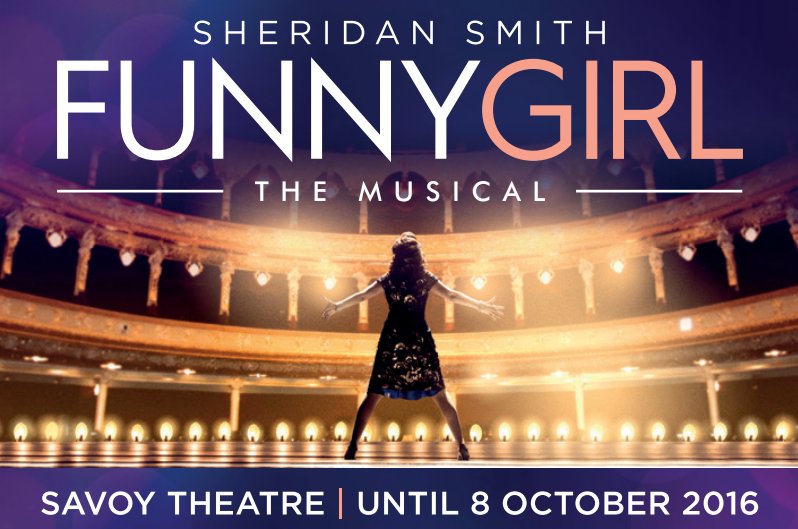
"Funny Girl", Savoy Theatre, London, 28/7/16


Second time around.

I'll admit, given my first experience with Sheridan Smith in the role, I was kind of hoping her understudy, Natasha J Barnes, would be on (she now shares the role with Smith who, for some reason, is unable to perform eight shows a week) especially given the raves she received when she filled in for a few months when Smith took leave (in fact the reviews were better for Barnes than Smith). As it happened, Smith was on. I had my fingers crossed she would, at least, get through the first act but otherwise left expectations at the door. As it turned out she completed the entire show. Just.


This production transferred from the Menier Chocolate Factory and was reworked in certain regards when it reached the West End stage - the design was enlarged and dance sequences were expanded. With a revised book by Harvey Fierstein (original by Isobel Lennart), Music by Jule Styne and lyrics by Bob Merrill the musical contains some iconic numbers including 'People' and 'Don't Rain On My Parade' and originally starred Barbra Streisand who has been intrinsically linked with the show ever since. It is, perhaps, because of this fact that a revival has yet to appear on Broadway and has only now materialised in the West End of London. Smith's profile and following was clearly enough to give the producers confidence in transferring to the West End (a confidence that must have been shaken following recent events) and, if nothing else, this production does indicate that "Funny Girl" need not rely on Streisand to sell it. It does, however, require a comedic actress with strong vocal gifts to lead the production. More on that later.

The production itself is relatively simple - not surprising given where it started - and doesn't have a massive chorus or orchestra. The simple production design by Michael Pavelka has some lovely elements including mirrors which are used evocatively. My only real qualm is with the backdrop which shows the auditorium of what appears to be a grand opera house, rather than a Broadway theatre fitting for the Zeigfield Follies back in the day. Travelators are used to effect throughout but this is the extent of the most technical aspects of the show (which makes the previous cancellation due to 'technical difficulties' harder to believe). Mark Henderson's unobtrusive lighting fits easily into the simplicity of the production as do the costumes of Matthew Wright.
Lynne Page's choreography is likewise relatively simple yet effective and the direction by Michael Mayer serves the show well, especially his use of Pavelka's mirrors which reflect the idea that the story is actually told in flashback.
The orchestra, which actually contains a string section, may be a touch thin on the ground but the sound they produce is quite impressive and the musical direction is confident, although 'Who Are You Now' (which in this production becomes an entirely pointless duet between 'Fanny' and 'Nick') and 'The Music That Makes Me Dance' are performed at such a tempo as to make their emotional content weak and ineffective.


The company are really excellent and contain numerous stand-out performances, from Marilyn Cutts, Valda Aviks and Gay Soper as 'Mrs. Brice' and her friends to Bruce Montague as 'Florenz Zeigfeld' who is both commanding and tender. But Joel Montague as 'Eddie Ryan' is a revelation. He dances and sings strongly, creating a character of real dimension and one the audience can empathise with. Darius Campbell as 'Nick Arnstein' cuts a striking and dashing figure and his vocals are as strong as he is still. It is this stillness which creates a dramatic contrast to the hyper-active 'Fanny Brice' of Sheridan Smith. Indeed, Smith's 'Fanny' is quite chaotic and one is not always convinced this is part of the performance. There are several occasions throughout the show where it seems Smith is veering on the edge and this sense of uncertainty and danger is one that can make an audience uneasy. Based on what I witnessed of her performance previously, this time around she is certainly more assured and confident, her diction clearer and her voice stronger (and more in tune), but she still relies too heavily on one or two vocal tricks and facial expressions, which actually become predictable throughout the show, to really make her performance entirely believable. She is indeed funny at times, even affecting, but there are too many points in the production where she is seemingly almost out of control. Her voice is not strong enough to handle the demanding score and in the bigger numbers it was very clear when Smith was gearing up to hit a note and I wonder why some of the numbers' keys were not lowered (this would certainly have aided Smith greatly). Whilst she managed to hit virtually all the notes, the sound that came out often sounded shrill, strained and thin and I found myself thinking of many a mediocre karaoke singer singing those same songs in bars around the world. The fact that Smith visibly broke character to celebrate her getting through 'People' is also not a great indicator. With all that said, Smith can be a moving actress and she does often find little moments to really show her talent. It's just a shame this is inconsistent.


But the show works, even if the revised book is not as successful as one would hope (the second act appears to need more work whilst the first wouldn't be harmed by a little trimming), and this production shows that the ghost of Streisand need not deter producers and directors from staging the show more often. It does show that a strong lead is required, however, and that lead need not be a famous name.
The show has announced a UK tour which is to commence in the new year and I only hope that the producers take these facts into consideration when casting 'Fanny'. Given the reviews she received, they could do worse than cast Natasha J Barnes in the role. At least then I'd get to see her in the part.

Monday, 7 January 2013

Heaven On Their Minds - Stephen Tate

Another (quick) video I created since I've had some requests to upload more of the Original London Cast album.
Stephen Tate performs as 'Judas'.

Saturday, 17 December 2011

'Priscilla Queen Of The Desert - The Musical', Palace Theatre, London, 15/12/11


For the second time I saw 'Priscilla' at the Palace Theatre in London which reinforced my feelings for this show: Once again I could not stop smiling from the overture through to the jubilant curtain call.


I finally got to see Richard Grieve as 'Tick' and was struck at how tall and handsome he is (he also has rather large feet!). He gave the role an elegant, assured voice and played the role with a sincerity and effortlessness that was something of a revelation. In short I fell in love with him from the get go.
Don Gallagher, Ray Meagher et al were as wonderful as before and Callum Nicol as 'Felica' was very good although Oliver Thornton who normally plays the role was missed; where Thornton has clearly perfected the role over time, Nicol has had less stage time in the role although the role is clearly an enjoyable one. Nicol's singing was top notch whilst his characterisation was clearly echoing that of Thornton (though no doubt this is how the character is written and directed) and the few individual touches that Nicol brought were enjoyable to behold.
Newley Aucett, who I'd previously seen as 'Tick' was excellent as 'Miss Understanding' setting the standard from the outset. Likewise Liz Ewing was brilliant as rough neck 'Shirley'.


The concept and the score work perfectly together and the book still comes across as sharp and succinct as before whilst the set and costume designs still remain something to be seen. 
It is still a shame that this joyous show is closing and will not be seen again (at least in this incarnation) as it has to be the most exuberant theatrical experience I've seen. I certainly can't recall any other show that makes me ache with smiling so much.

Tuesday, 29 November 2011

'Ghost The Musical', Piccadilly Theatre, London, 17/11/11

From the overture, complete with a title sequence, it was clear that the film was never far from the creators minds (well, the screenwriter also wrote the book!), so much so that there were few deviations from the film’s details, save for theatrical purposes (there is no penny floating in the air for example, but what replaces it is simple, theatrical and succinct.).
Musically the score is enjoyable, though only one or two songs really stood out for me. That said it certainly suits the piece well since the whole production has a look and feel that is part musical theatre, part rock concert, especially where the lighting is concerned. Sadly, at times, the music obliterated the words though this was not detrimental to the understanding of the story.
Rob Howell’s design was fluid with moving floor sections (a tad overused in my opinion) and LED walls being used to present a variety of locations and effects. Speaking of effects, the magic effects (including the Blue Room Illusion) by illusionist Paul Kieve were truly engaging and well executed and  kudos must go to the lighting which aided in many of these. Likewise the projections served the production well.
The choreography by Ashley Wallen seemed quite alien at times in relation to what was happening plot-wise and served no real dramatic purpose at times though when used to comment on fast living NYC and the world of finance then it came into its own as did the chorus.
Caissie Levy was clearly the outstanding performer of the show with a great voice, subtle acting and believability as ‘Molly’ that removed any thought of Demi Moore instantly. Richard Fleeshman as ‘Sam’ fared less well however: He certainly looks good in the role but is let down somewhat by a voice that isn’t consistent; he breathes most of the lower notes, rendering them almost inaudible, and it seems that, at times, he is fighting with the higher notes. In his mid-range, though, he is quite effective. Otherwise he is generally believable throughout if a tad one dimensional at times.
Sharon D Clarke normally plays ‘Oda Mae’ but I saw her understudy Lisa Davina Phillip instead who played the role for every laugh possible. She had the entire audience in stitches and sang with an energy that stole every scene she was in. Hers is a role that contrasts with the more subdued leading characters and that contrast was well played. 
I also saw the understudy ‘Carl’; Paul Ayres seemed to be trying too hard and as such his character seemed to be a little bit of a caricature when compared to the others. I hope that as he performs the role more he will settle into the part. I was a trifle disappointed not to see Andrew Langtree in the role but such is life. The supporting characters were excellently played and the company performed well.
Matthew Warchus’ direction is fluid, sharp and his manipulation of the stage as a whole is amongst the best I've seen. Some of the more dramatic moments, however, feel a tad rushed and leave the audience with little time to empathise with the people they are watching before quickly moving onto the next piece of action within the scene. It is also worthy to note that the iconic pottery wheel moment is referenced to but in a clever way that is not a mere rehashing of the film’s scene. In fact it becomes one of the most honest and emotive points in the show.
Overall this is a most enjoyable show and certainly something special to experience live and I do believe this will appeal to an audience of a vast variety and I expect it to last a fair while in London.

Friday, 25 November 2011

'Priscilla Queen Of The Desert', Palace Theatre, London, 17/11/11


So, at long last, I got ‘round to seeing ‘Priscilla’ onstage. And boy am I glad I did! It is precisely the kind of show that is needed in these gloomy times where one enters the theatre and forgets about every trifle that the real world can throw at you.
The plot is pretty much that of the film - Sydney drag queen recruits two other performers for road trip for a performance engagement in Alice Springs with a few surprises along the way – though the staging is overtly theatrical and heightened but, even in the most ‘straight’ of scenes, never fails to capture the audience. Underlying all the camp, glitter and fun is a story about friendship, love and ‘coming of age’.

The production has an engaging concept with the show being a huge, elaborate, drag show that exudes an energy that grabs you from the opening announcement and glitter ball and refuses to let go until long after the curtain falls. I don’t think I’ve ever smiled and laughed as consistently as I did in the Palace theatre watching this show. The show is almost pure joy and happiness.
The cast were brilliant with Tristan Temple as ‘Miss Understanding’ setting the standard for the evening with her ebullient performance and quick asides. Oliver Thornton clearly relished his once-in-a-lifetime role as ‘Felicia’ and Don Gallagher was equally at home as ‘Bernadette’ and, whilst I was initially disappointed that there were several understudies on during the performance (Lucy Newton as 'Diva', Olivia Phillip as 'Shirley', Newley Aucutt as 'Tick/Mitzi' and Tristan Temple as 'Miss Understanding'), Newley Auckett , in place of Richard Grieve (who I would love to have seen), was a very sincere and truthful ‘Mitzi’ and not one cast member could be seen as a weak link and the ‘Divas’ were certainly guilty of being fabulous in all respects. Ray Meagher was also perfect as ‘Bob’ and was welcomed on almost all his entrances by cheers from the audience. The entire cast was almost upstaged, however, by the appearance of a little boy in a kangaroo suit in the finale where the large feet  caused him to waddle about the stage in the most adorable and cute way. Awww indeed.

I cannot understand how this show can be closing though, evidently, it must be declining from the producer’s point of view. All I can hope is that it has a life in the UK beyond the West End with, hopefully, a tour at some point to further spread joy. In the meantime, if you can, go and see it!

Sunday, 21 August 2011

'Love Never Dies', 20/8/11, Adelphi Theatre


I was never enamoured with the idea of a sequel to 'The Phantom Of The Opera' but when the album of 'Love Never Dies' emerged I was entranced by the score. It had its clunky moments but it certainly included some of the best material Andrew Lloyd Webber had written in years.
The evolution of the musical is well recorded and it had been revised several times over its opening year with the final version being quite different to the original album complete with revised book, lyrics and song order.


Though I never saw the opening version it is clear, just by listening to the album and comparing it to the final version, that the revisions were almost all for the better (I say 'almost' because they cut a short phrase that Christine sings following her confrontation with the Phantom which I always thought stunning. Its extraction from the score does not affect the whole though.) with the music certainly flowing better with more references made to the original 'Phantom' show.
The entire cast was sensational with Tim Walton playing 'Raoul' as a well rounded, and tragic, figure whose inner demons are destroying his life. Ramin Karimloo's 'Phantom' is powerful and, at times, pathetic, with a soaring voice. Karimloo's performance is well judged, emotional and precise with the addition of certain gestures and movements an echo of the first incarnation of the 'Phantom' as seen in the original show.


Haley Flaherty as 'Meg' is both childlike and world-weary presenting another precisely pitched performance. the same can be said of Liz Robertson as 'Madame Giry'.


Celia Graham plays 'Christine' with such grace and ease that she is almost otherworldly, as she should be. She presents a matured mother with an underlying echo of the naive child seen in the original show. Her voice is clear and beautiful, her diction sharp, yet, as her climactic aria arrives, she proves she has even more to give. Graham's is a well paced and polished performance and her vocals climax at the perfect moment when she delivers the title song; here 'Christine' rediscovers herself and her voice soars as never before enthralling the audience and mesmerising all.
The chemistry the primary trio has is also palpable and throughout the show there are moments which are so well presented by the cast that it is almost overpowering to behold.


The emotional power of this show was such that from the opening song sung by Karimloo's haunted 'Phantom' I was on the verge of tears. Throughout the remainder of the show there were many moments where the hairs on my entire body were on end until, finally, as Graham performed 'Love Never Dies' coupled with its simple, effective staging, the tears began to flow right through to the incredible finale.


The design is impressive, although a little stark at times, whilst the lighting and sound are quite perfect. The orchestra, conducted by David Steadman, sounded incredible and served the score perfectly.
It is a shame indeed that this show has had too brief a run as it does indeed deserve further intention but I am so happy that I managed to catch it before it closed, especially given that the finale was revised slightly only a few days before given the 'Phantom' the chance to recount what he wrote and what 'Christine' sang, reinforcing the emotional climax more powerfully.

This musical is probably the most emotionally engaging event I have ever witnessed and though the plot is more a sequel to the 2004 film rather than the 1986 musical the emotional journey is worth the ride alone.
Sad though the closing is, I can, at least, look forward to the future DVD release of the Australian production of 'Love Never Dies' which boasts totally different direction and design (which truly looks amazing). Nevertheless, witnessing the cast that I did, I am haunted by the London production and feel that it will be one of those theatrical experiences that will live with me for ever.